
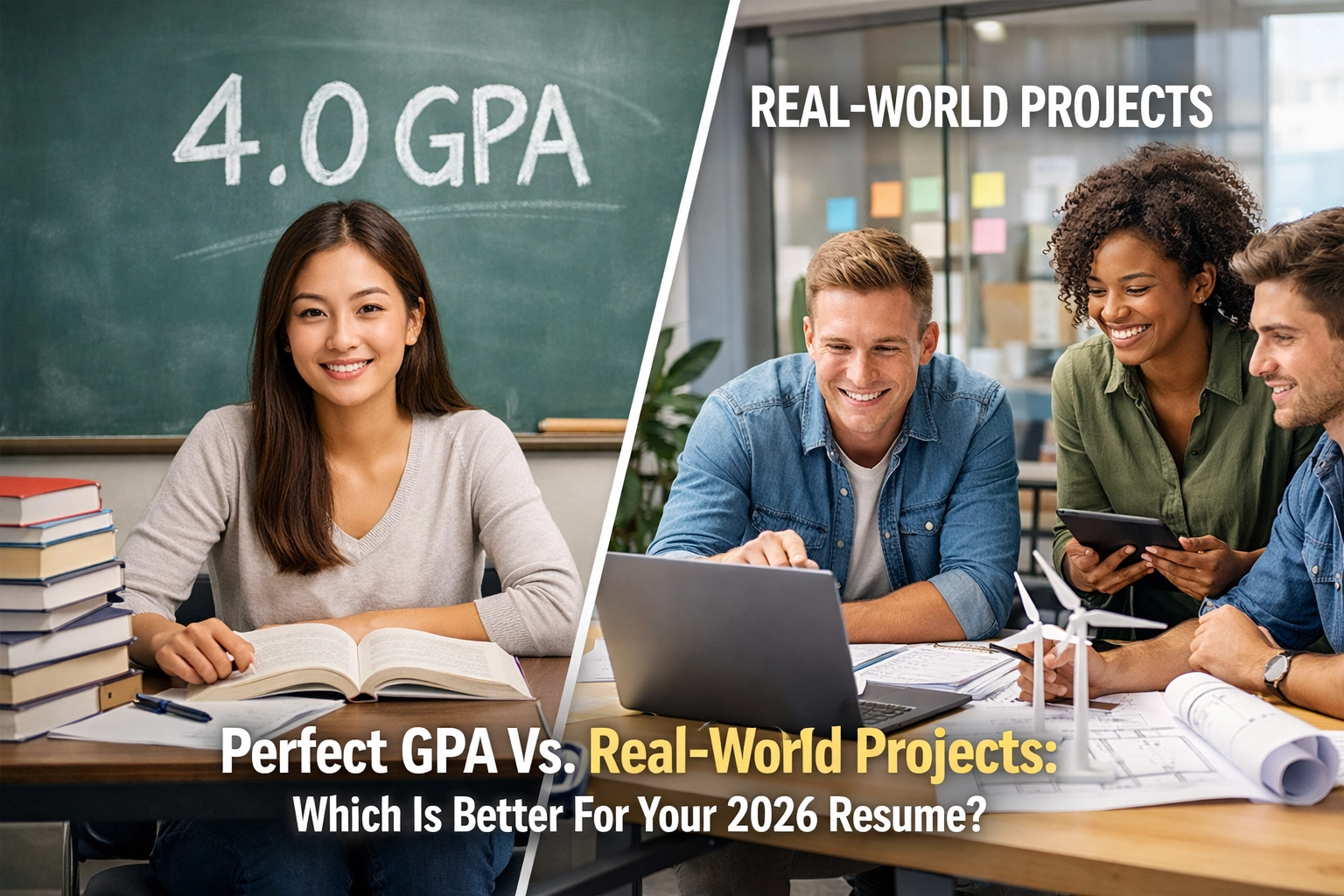

Let’s be honest for a second. We’ve all been there: staring at a blinking cursor on a blank Word document, wondering if that "A" in Advanced Macroeconomics actually means anything to a hiring manager sitting in a high-rise office (or more likely, their home office) in 2026.
For decades, the GPA was the holy grail. It was the gatekeeper. If you didn’t have the magic 3.5 or 4.0, your resume was destined for the digital "circular file." But as we navigate the landscape of 2026, the ground has shifted. The question isn't just "What was your grade?" anymore. It’s "What can you actually do?"
At Bindralearning Inc., we see this shift every day. Our mission and vision have always been about empowering learners to reach their full potential, and in today's market, that potential is measured by impact, not just ink on a transcript.
So, let’s settle the debate. If you only have limited space on your resume, should you polish that GPA or highlight that side project you’ve been hacking away at?
The 4.0 Myth: Why the Pedestal is Crumbling
In 2026, the traditional GPA is facing a bit of an identity crisis. With the rise of AI-assisted learning and specialized online certifications, a grade doesn't always tell the full story of a candidate's struggle or success. Employers have realized that a 4.0 student might be great at following instructions and taking tests, but can they handle a pivot in a high-stakes project? Can they collaborate with a remote team across three time zones?
Don't get me wrong: academic achievement still matters. It shows discipline, consistency, and a baseline of intelligence. But it’s no longer the only thing that matters.

When GPA Still Holds Weight
There are still a few scenarios where you should keep that GPA front and center:
- The Fresh Grad Rule: If you graduated within the last 12 months and your GPA is a 3.5 or higher, flaunt it. It’s your most recent "proof of work."
- Specific Industries: Fields like investment banking, big-law, or certain engineering roles still use GPA as an initial filter because they receive thousands of applications.
- Academic Continuity: If you’re applying for specialized research roles or scholarships like the CSCRP Scholarship, your academic record is a vital part of your story.
However, if you’ve been out of school for more than a year, or if your GPA is sitting comfortably (or uncomfortably) below a 3.4, it’s time to change your strategy.
Enter the Era of the "Proof of Work"
In 2026, hiring managers are looking for "proof of work." This is where real-world projects come into play. A project isn't just a line item; it’s a narrative. It tells a story of a problem, a solution, and the messy middle where you actually learned something.
Think about it from a recruiter's perspective. Would you rather hire someone who got an 'A' in a marketing class, or someone who managed a $1,000 ad budget for a local non-profit and increased their engagement by 40%? The answer is obvious.
Why Projects Win Every Time
Real-world projects offer something a GPA never can: Quantifiable Impact.
When you list a project on your resume, you aren't just saying you know a subject; you're proving you can apply it. This is the core of what we teach in our courses at Bindralearning. Whether it’s through our Lightning Math Enhancement Program or other specialized tracks, the goal is always practical application.
- Context: Projects show you can work within constraints (time, budget, tools).
- Adaptability: They prove you can learn new software or methodologies on the fly.
- Passion: Side projects demonstrate that you are a self-starter who doesn't need a syllabus to get moving.

Building a Portfolio That Pops
If projects are the new currency, your portfolio is your bank account. In 2026, a link to a GitHub repository, a personal website, or a Notion page is often more valuable than a PDF of your transcript.
Here is how to structure your project section to grab attention:
- The Headline: Instead of "Project 1," use "E-commerce Optimization Project" or "Community Literacy Initiative."
- The Tech Stack/Skills: List exactly what you used. Python? Canva? Agile Methodology? Be specific.
- The Result: This is the most important part. Use numbers. "Reduced page load time by 2 seconds" or "Onboarded 50 new volunteers."
If you're feeling stuck on how to start building these projects, don't hesitate to contact us or fill out an enquiry form. We love helping students bridge the gap between "learning" and "doing."
The Professional Pivot: 1+ Year of Experience
If you’ve been in the workforce for a while, the "GPA vs. Projects" debate is already over. Your GPA "offers minimal benefit on your application" once you have real professional accomplishments to show for yourself.
At this stage, your resume should focus heavily on your professional trajectory. Hiring managers want to see how you’ve grown in your roles, the teams you’ve led, and the revenue (or value) you’ve generated. If you’re still leading with your college grades three years into your career, it might actually signal that you haven't done much of note since graduation.

How to Balance Both (The Hybrid Approach)
You don't necessarily have to choose one or the other. The best 2026 resumes use a hybrid approach that highlights academic foundations while leaning heavily on practical execution.
- For the High-Achiever: Keep the GPA in a small "Education" section at the bottom, but dedicate the top 60% of your resume to internships and projects.
- For the "Experiential" Learner: If your grades weren't stellar because you were busy running a small business or coding apps, lead with a "Featured Projects" section right under your summary. Explain how those experiences built the skills the employer is looking for.
This is the philosophy our founder has always championed: education is about the journey of discovery and the ability to contribute to the world in a meaningful way.
Conclusion: Your Potential is Not a Number
As we move further into 2026, the "Standardized Student" is becoming a thing of the past. Companies are looking for creators, problem-solvers, and innovators. While a perfect GPA is a wonderful achievement, it is the floor, not the ceiling.
Your projects: the things you built when no one was grading you: are what truly define your professional identity. They show your grit, your curiosity, and your readiness for the challenges of the modern workplace.
So, take a look at your resume. Is it a list of grades, or is it a portfolio of possibilities? If you’re ready to stop worrying about the decimals and start focused on the deliverables, Bindralearning Inc. is here to help you navigate that transition.
The truth about getting hired in 2026? It’s not about how well you can remember the answers; it’s about how well you can solve the problems that don't have an answer key yet.
Let's get to work.

Want to learn more about how we’re changing the face of education? Check out who we are and how we're supporting the next generation of leaders through initiatives like STEMTRAK4USA.